

Mining Methods
Opencast vs Underground Mining: Key Differences & Applications
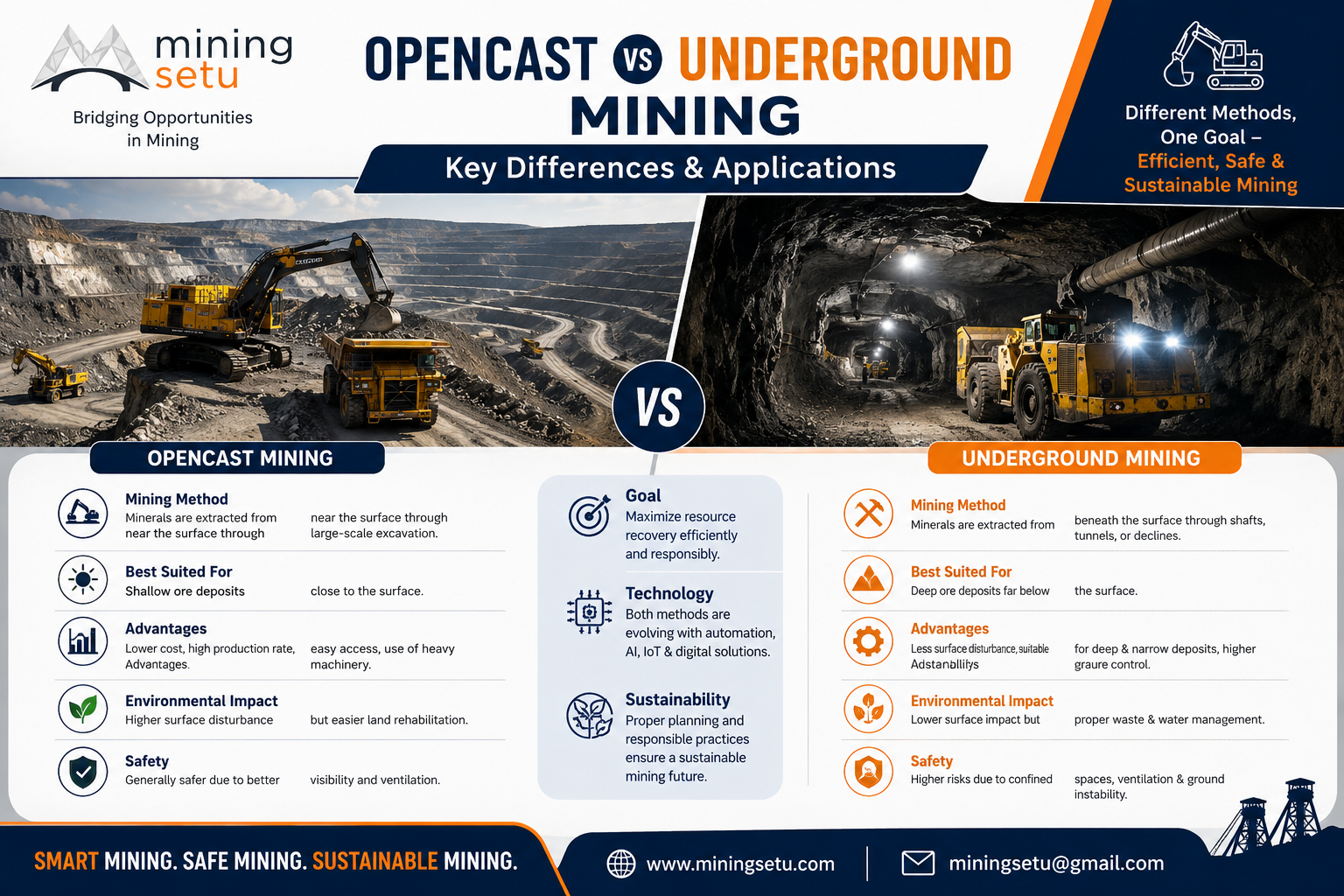
Mining methods are primarily selected based on the depth, size, geometry, and grade of a mineral deposit. The two major methods are opencast mining and underground mining. Both aim to maximize resource recovery, but they differ significantly in equipment, cost, production scale, environmental impact, and working conditions.
Opencast Mining
Opencast mining extracts minerals from deposits located close to the surface through large-scale excavation.
- Best Suited For: Shallow ore deposits close to the surface.
- Primary Equipment: Draglines, bucket-wheel excavators, high-capacity dump trucks, excavators, and continuous mining equipment.
- Capital Cost: Generally requires lower initial investment compared with developing underground shafts and tunnel networks.
- Operational Scale: High-volume, bulk handling operations that benefit from economies of scale.
- Advantages: High production rates, easy access, and efficient use of large mining machinery.
- Environmental Impact: Greater surface disturbance, but land rehabilitation can be planned after mining.
- Workforce Environment: Open-air working conditions with generally better visibility and ventilation, although workers may still face dust, noise, blasting, and weather-related risks.
Underground Mining
Underground mining extracts minerals located deep below the surface through shafts, tunnels, declines, and other underground workings.
- Best Suited For: Deep ore deposits and narrow or high-grade mineral bodies.
- Primary Equipment: Continuous haulage systems, longwall miners, load-haul-dump (LHD) loaders, underground drill rigs, and specialized haulage equipment.
- Capital Cost: Higher initial investment is generally required for shaft sinking, tunneling, ventilation, dewatering, and underground infrastructure.
- Operational Scale: More targeted and selective extraction, often focused on high-grade ore and resource recovery rather than sheer volume.
- Advantages: Less surface disturbance and greater suitability for deep deposits and selective extraction.
- Environmental Impact: Lower direct surface disturbance, but requires careful management of underground waste, water, subsidence, and ventilation.
- Workforce Environment: Requires strict atmospheric monitoring, dust suppression, ventilation, illumination, and ground-control systems due to confined and potentially hazardous working conditions.
The Right Mining Method
The choice between opencast and underground mining depends on several factors, including orebody depth, geological conditions, mineral grade, stripping ratio, production targets, capital investment, safety requirements, and environmental considerations. With responsible planning, modern technology, automation, AI, and digital solutions, both methods can contribute to efficient, safe, and sustainable mining.
Mining Setu
Smart Mining. Safe Mining. Sustainable Mining.
Web site:- www.miningsetu.com
Gmail Id:- miningsetu@gmail.com